Skip to content
Careers
Donate

Visit the ICE Network

  • About ICE
    • Governance
    • Our Team
    • Our Story
    • Contributors & Collaborators
    • Commitment to Social Action
  • Our Programs
    • 20/20 Catalysts
    • Bringing It Home
      • Project Accelerator
      • Regional Energy Coach Program
    • Energy & Climate
    • Generation Power
    • ImaGENation
    • ICE Mentorship
    • Charge Up
  • Connect & Learn
    • ICE Directional Gatherings
    • Home Energy Experience Tour
    • Decolonizing Power Podcast
    • ICE Gathering
    • ICE Resources
    • Reports & Publications
  • News & Events
  • Contact
  • Careers
  • Donate
  • About ICE
    • Governance
    • Our Team
    • Our Story
    • Contributors & Collaborators
    • Commitment to Social Action
  • Our Programs
    • 20/20 Catalysts
    • Bringing It Home
      • Project Accelerator
      • Regional Energy Coach Program
    • Energy & Climate
    • Generation Power
    • ImaGENation
    • ICE Mentorship
    • Charge Up
  • Connect & Learn
    • ICE Directional Gatherings
    • Home Energy Experience Tour
    • Decolonizing Power Podcast
    • ICE Gathering
    • ICE Resources
    • Reports & Publications
  • News & Events
  • Contact
  • Careers
  • Donate

Regenerative Energy

A National Survey of Indigenous Clean Energy Leadership Across Canada

2026

Highlighting the rapid growth of Indigenous ownership and participation in clean energy.

Highlighting the rapid growth of Indigenous ownership and participation in clean energy.

This is Indigenous Clean Energy’s third National Survey.

The name Regenerative Energy reflects the crucial relationship between Indigenous sovereignty, stewardship of the Earth, and energy futures.

After years of data compilation, Regenerative Energy presents a national snapshot of how First Nations, Inuit, and Métis peoples and communities are shaping Canada’s energy future through innovation, stewardship, and community-driven solutions.

Download the Report

Data and Graphics

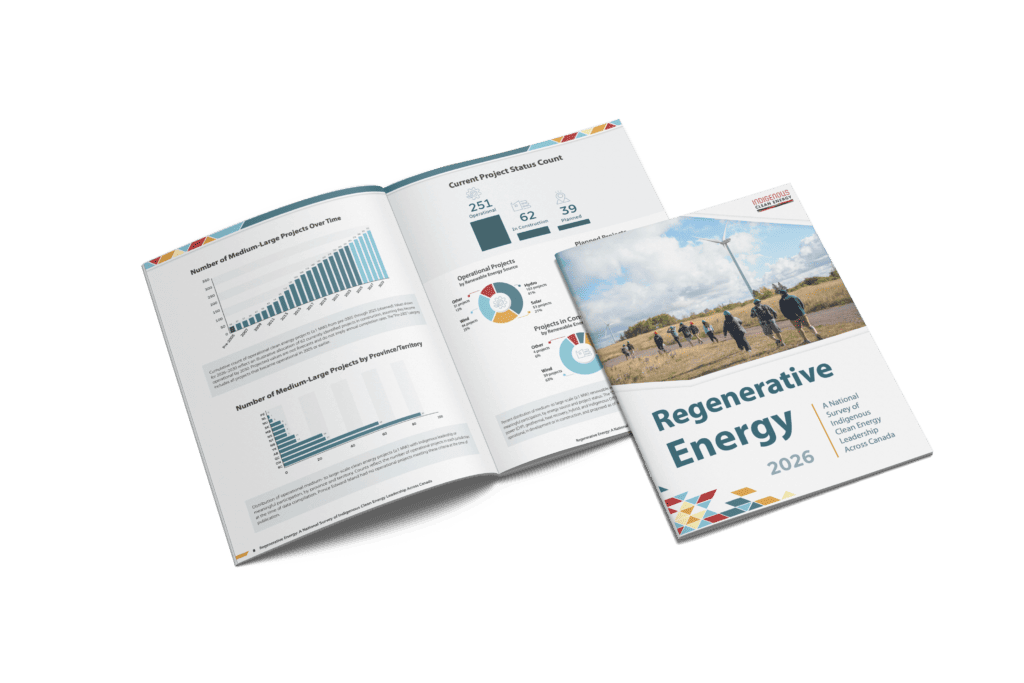
Indigenous Clean Energy’s third National Survey provides data on Indigenous ownership and participation in clean energy projects across Canada, notably renewable power generation, electricity transmission, and storage.

The report presents aggregate data on the number of projects at the operational, construction, and planning stages, nationally and by province/territory. Estimates of Indigenous investment, financial returns, and economic impacts, notably employment, are also provided.

The National Survey highlights success factors that underpin Indigenous clean energy projects. Based on the data, programming, and experiences, Indigenous Clean Energy concludes the National Survey with recommendations focused on advancing clean energy projects through Indigenous leadership, catalyzing substantive social and economic impacts.

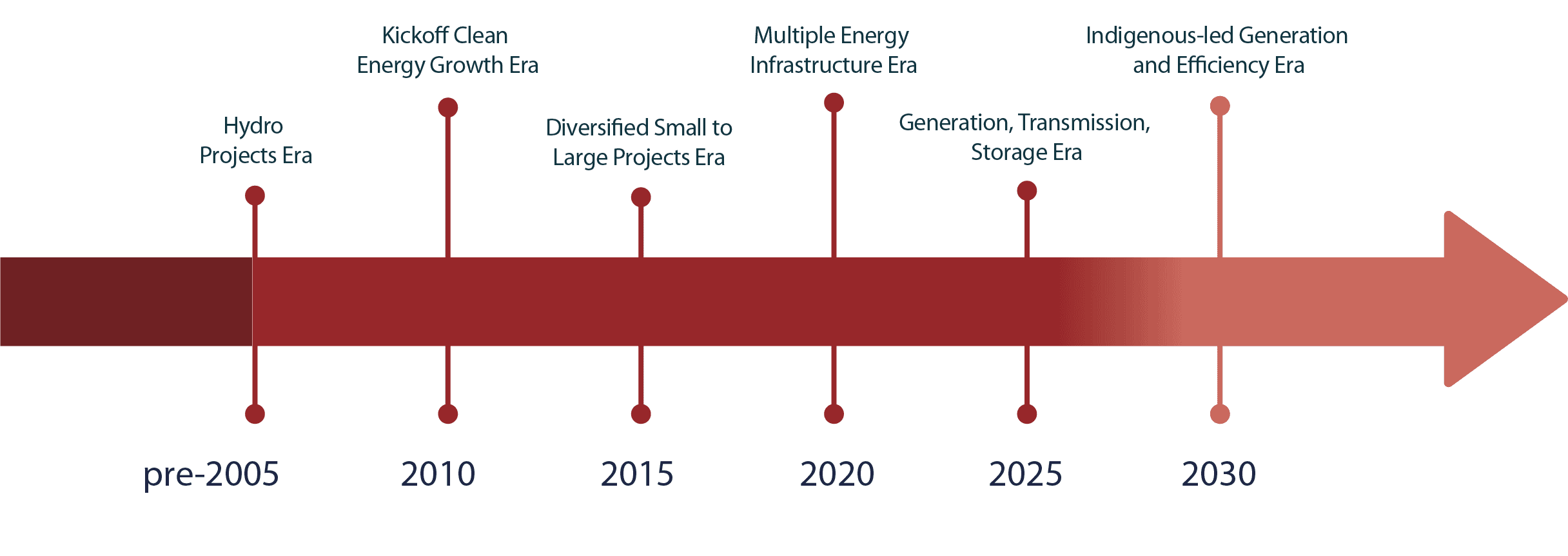
Indigenous Clean Energy Timeline

Indigenous participation in clean energy projects and infrastructure began 20 to 25 years ago and has evolved over time. The past 15 years have seen more substantive Indigenous leadership, equity participation, and project diversity across the country, as illustrated below.

Current Indigenous Clean Energy Projects

The energy sources and jurisdictions of current medium to large electricity generation projects with Indigenous participation are illustrated in the charts on the following page. The data highlights large-scale project equity held by Indigenous communities and organizations in clean energy projects, second in rank only to the position of utilities across the country.

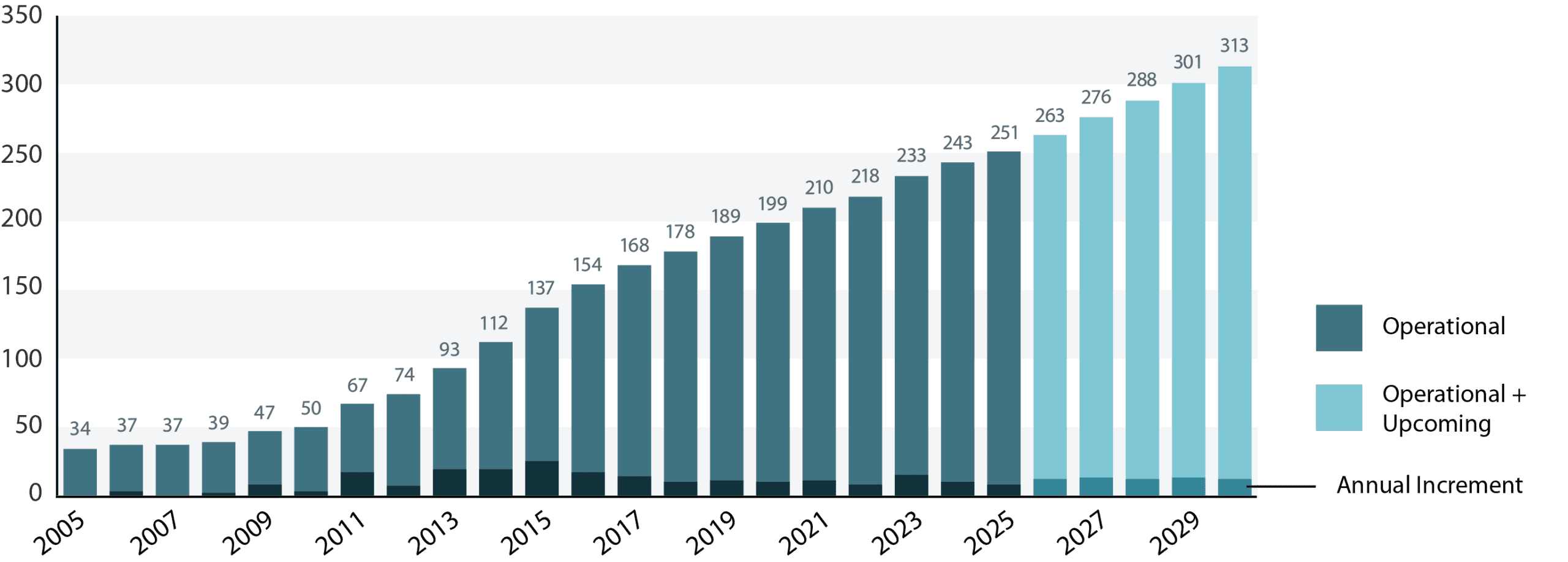
Number of Medium-Large Projects Over Time

Cumulative count of operational clean energy projects (≥1 MW) from pre-2005 through 2025 (validated). Values shown for 2026–2031 reflect projects in advanced planning or under construction that are expected to be completed by 2031. The “Pre-2005” category includes all projects that became operational in 2005 or earlier.

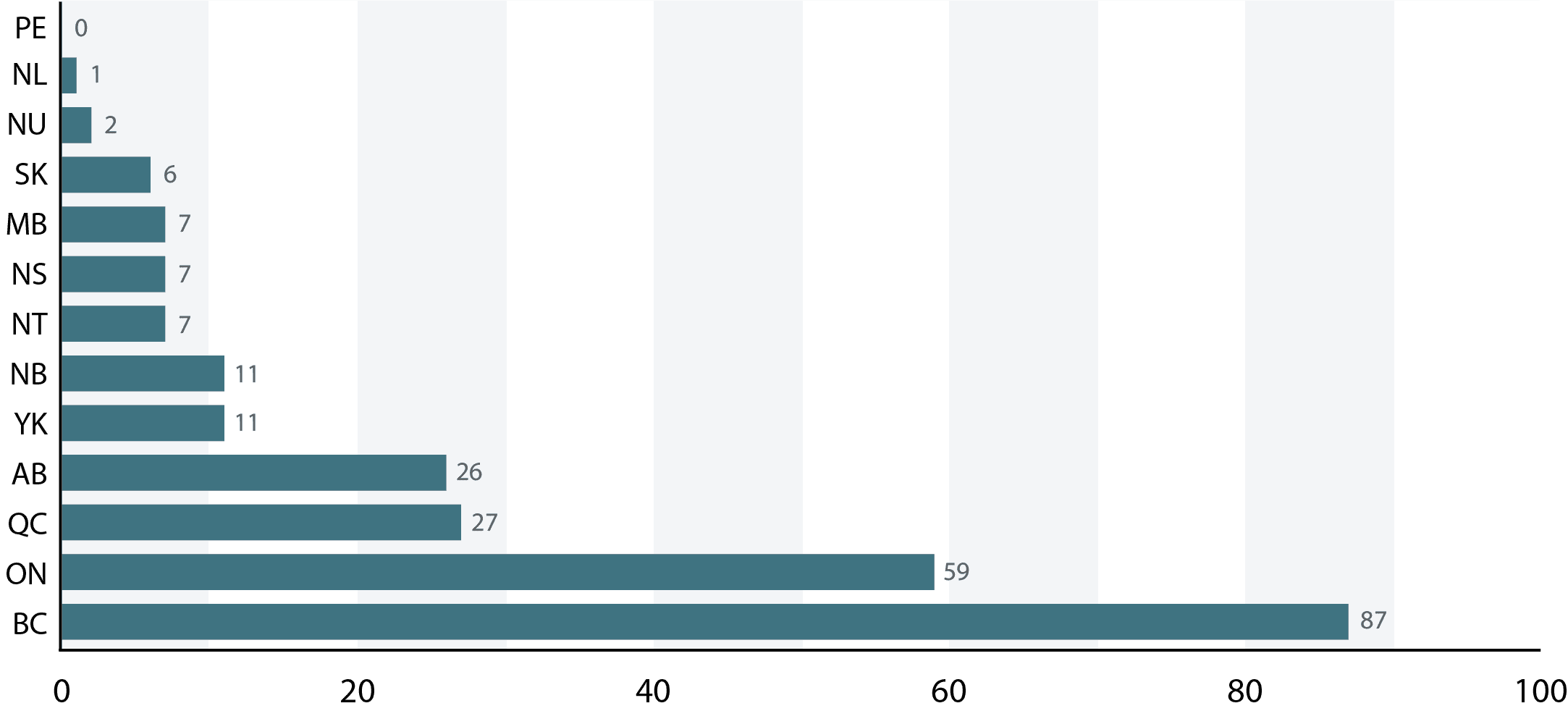
Number of Medium-Large Projects by Province/Territory

Distribution of operational medium- to large-scale clean energy projects (≥1 MW) with Indigenous leadership or meaningful participation, by province and territory. Counts reflect the number of operational projects in each jurisdiction at the time of data compilation. Prince Edward Island had no operational projects meeting these criteria at the time of publication.

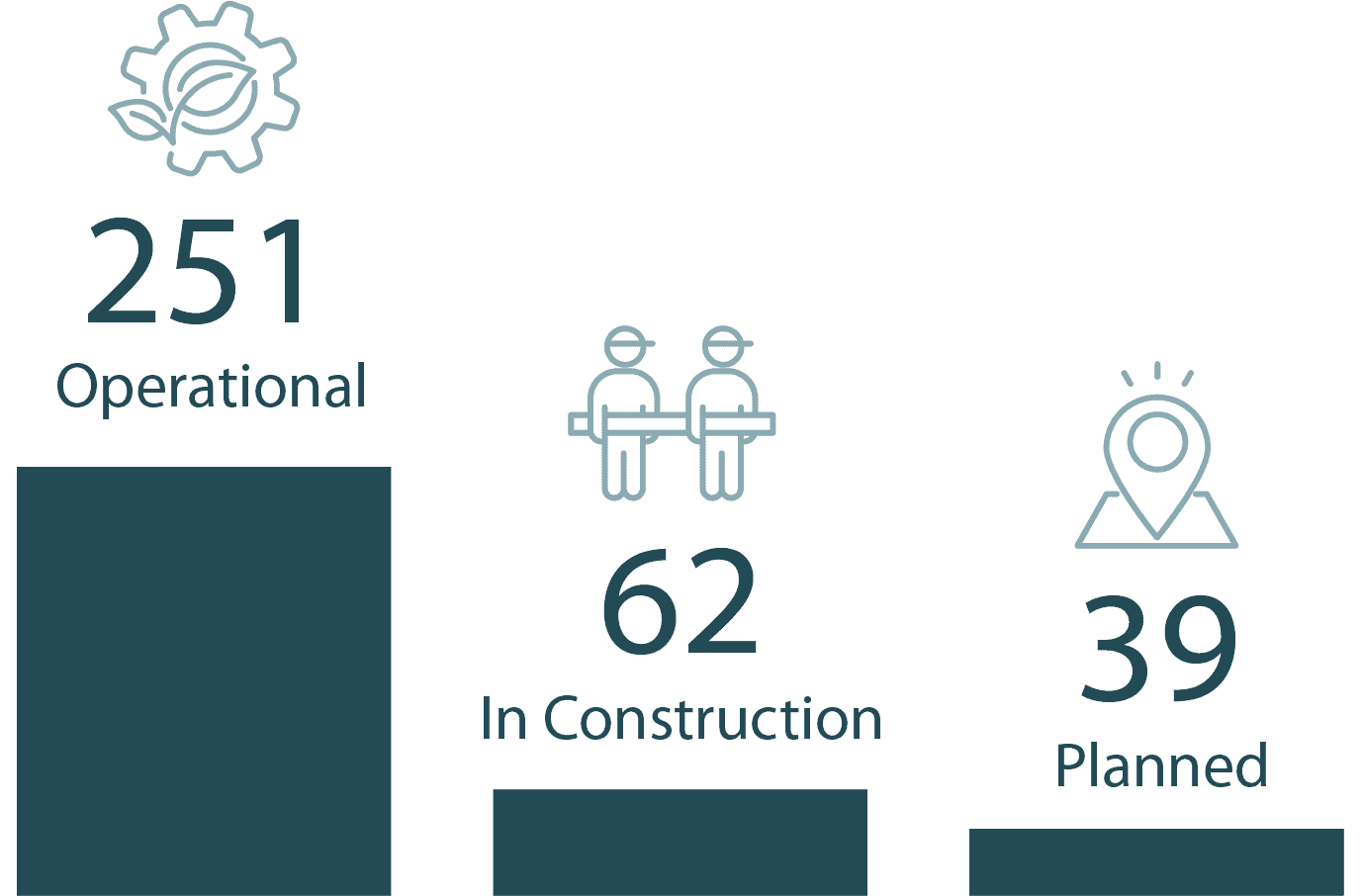
Current Project Status Count

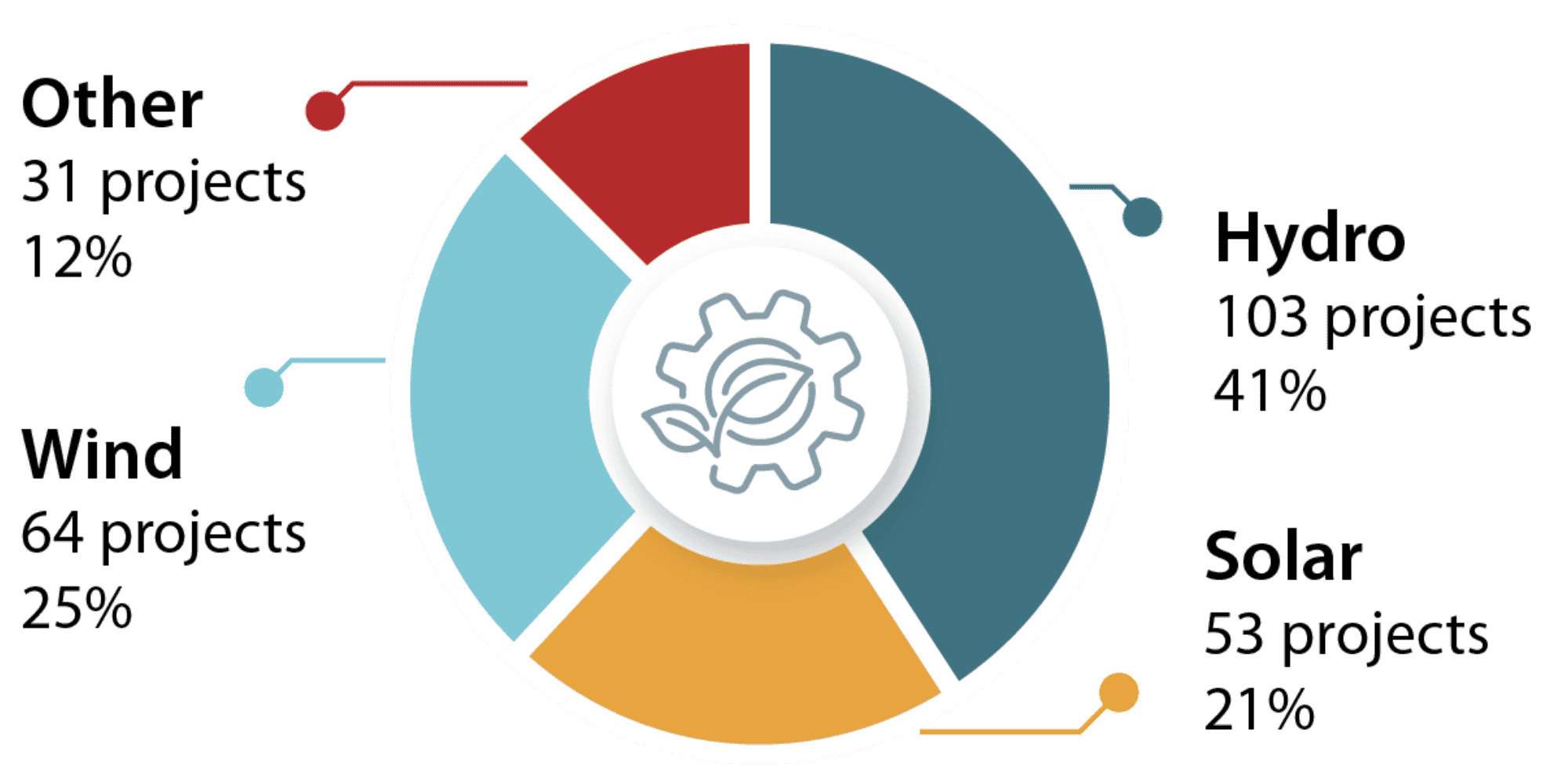
Operational Projects by Renewable Energy Source
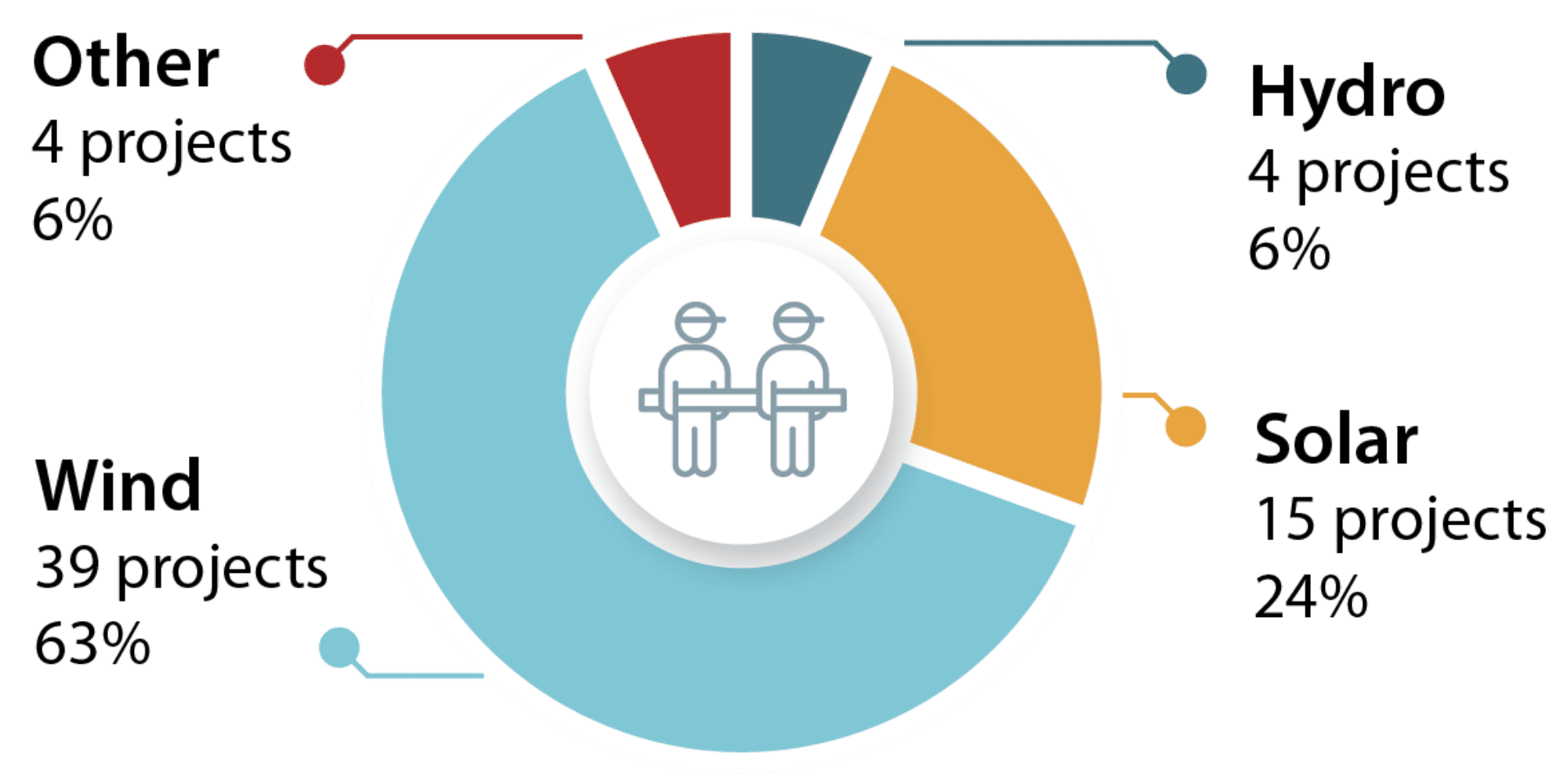
Projects in Construction
by Renewable Energy Source
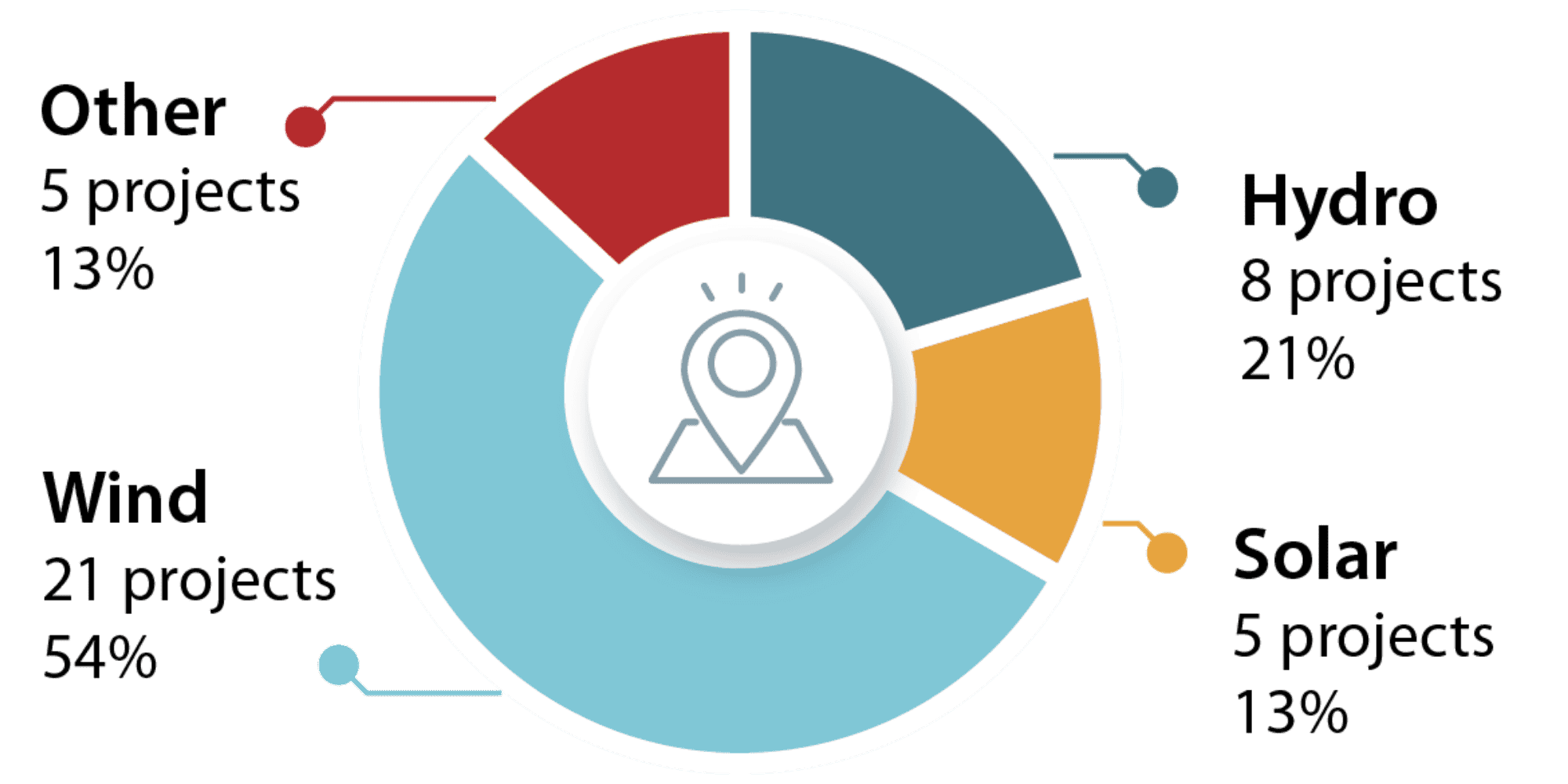
Planned Projects by Renewable Energy Source

Operational Projects by Renewable Energy Source

Projects in Construction by Renewable Energy Source

Planned Construction by Renewable Energy Source

Percent distribution of medium- to large-scale (≥1 MW) renewable energy projects with Indigenous leadership or meaningful participation, by energy source and project status. The “Other” category includes bioenergy, Combined Heat and Power (CHP), riverine and ocean, geothermal, heat recovery, hybrid, and Indigenous Off Diesel Initiative (IODI) projects. Counts reflect projects that are operational, in development or in construction, and proposed as of the time of data compilation. Percentages might not sum to 100% due to rounding.

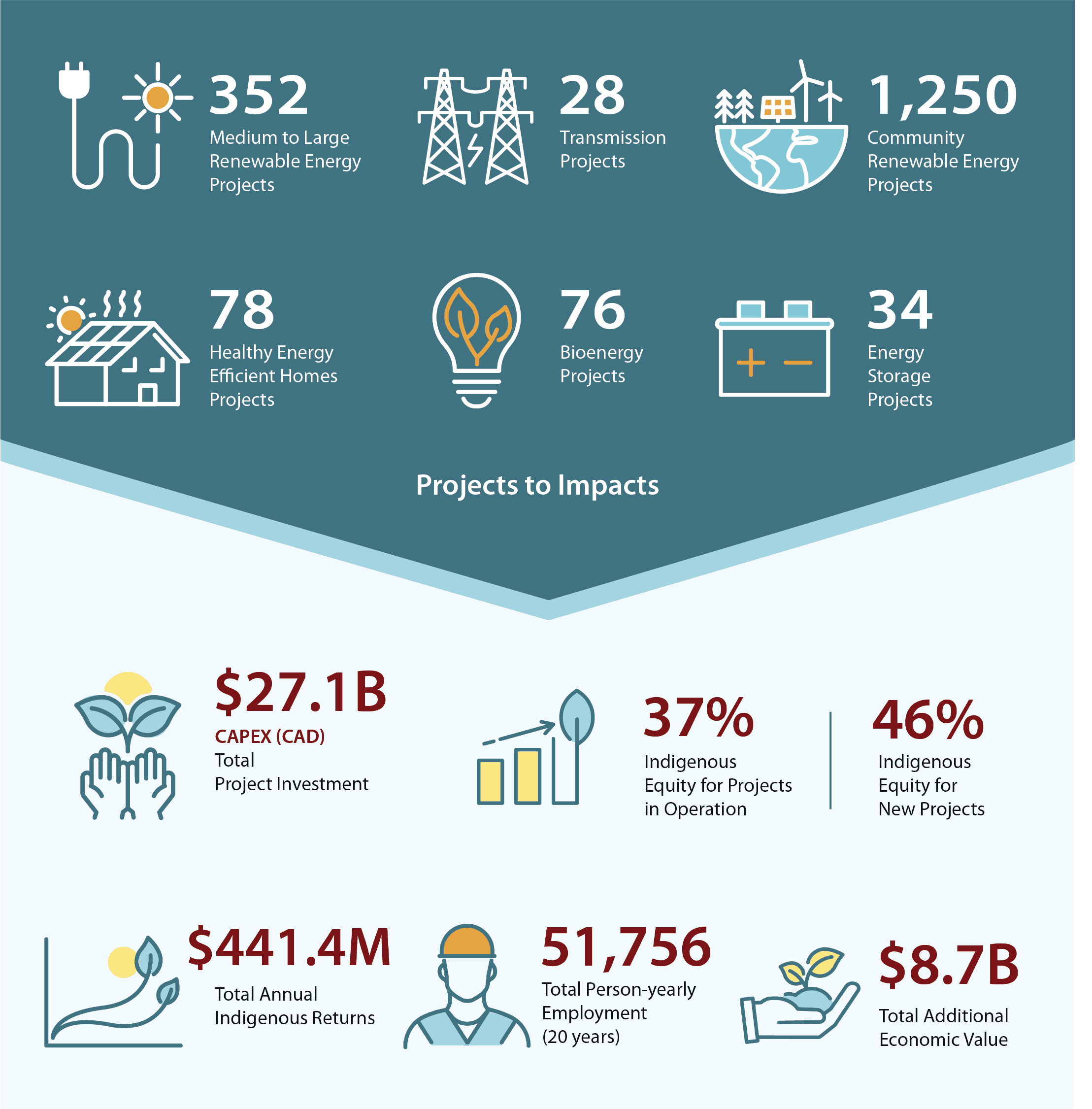
Current Project Status Count and Impacts

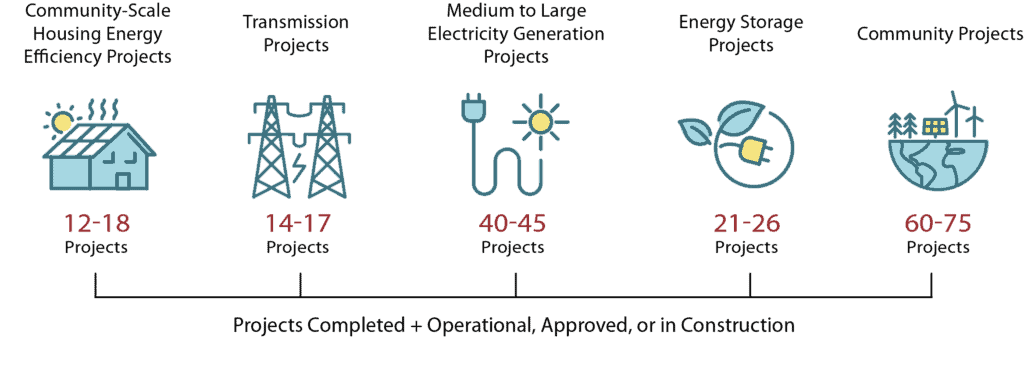
Projected Growth of Indigenous Clean Energy Projects

2026–2031 Period

Energy Efficiency Projects

Energy-efficient Indigenous housing is a vital priority for Indigenous communities across Canada. Housing encompasses the intersections of human health, culture, and the environment, connected to social and economic opportunities and sustainability.

Due to historic and ongoing impacts of colonization, Indigenous Nations across the country are facing a housing crisis. Common challenges include energy-inefficient, unsafe, unhealthy housing, with limited climate resilience. 

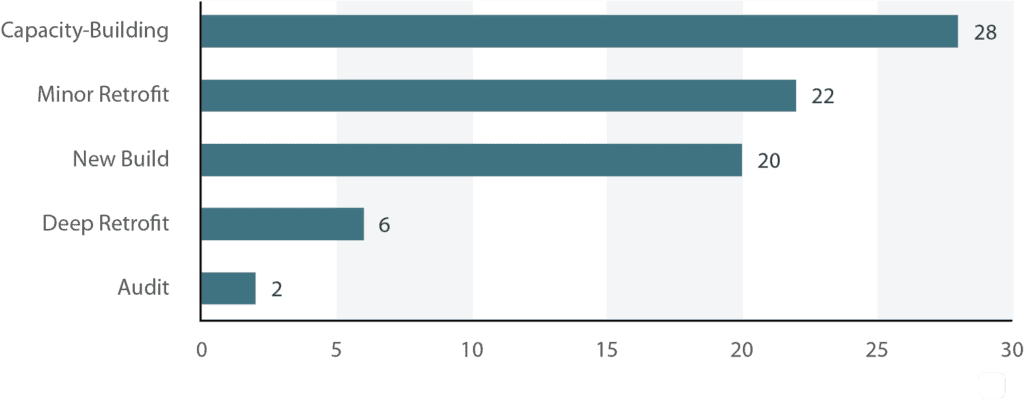
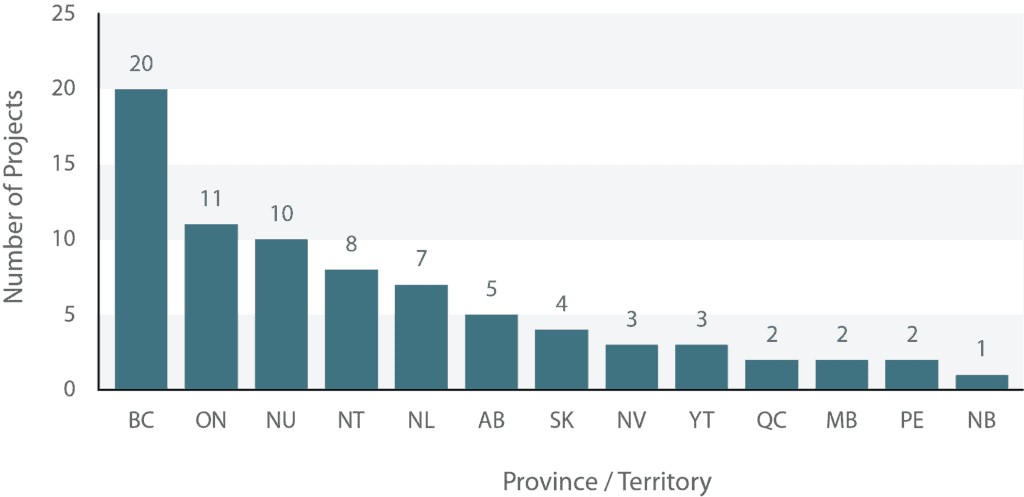
Overall, 78 projects have been identified, with varying sizes and measures. Indigenous energy efficiency housing action is taking place Canada-wide, with projects in most provinces and territories.

Indigenous Clean Energy tracks the following Indigenous energy-efficient housing trends.

Indigenous Energy Efficiency Housing Projects by Type​

Indigenous Energy Efficiency Housing Projects by Region

Count of Indigenous community energy efficiency housing projects by type and region as of 2026. Data is collected by the Bringing It Home program and includes projects that are in the pre-development stage (12), in progress (47), and complete (19).

Project Success Factors

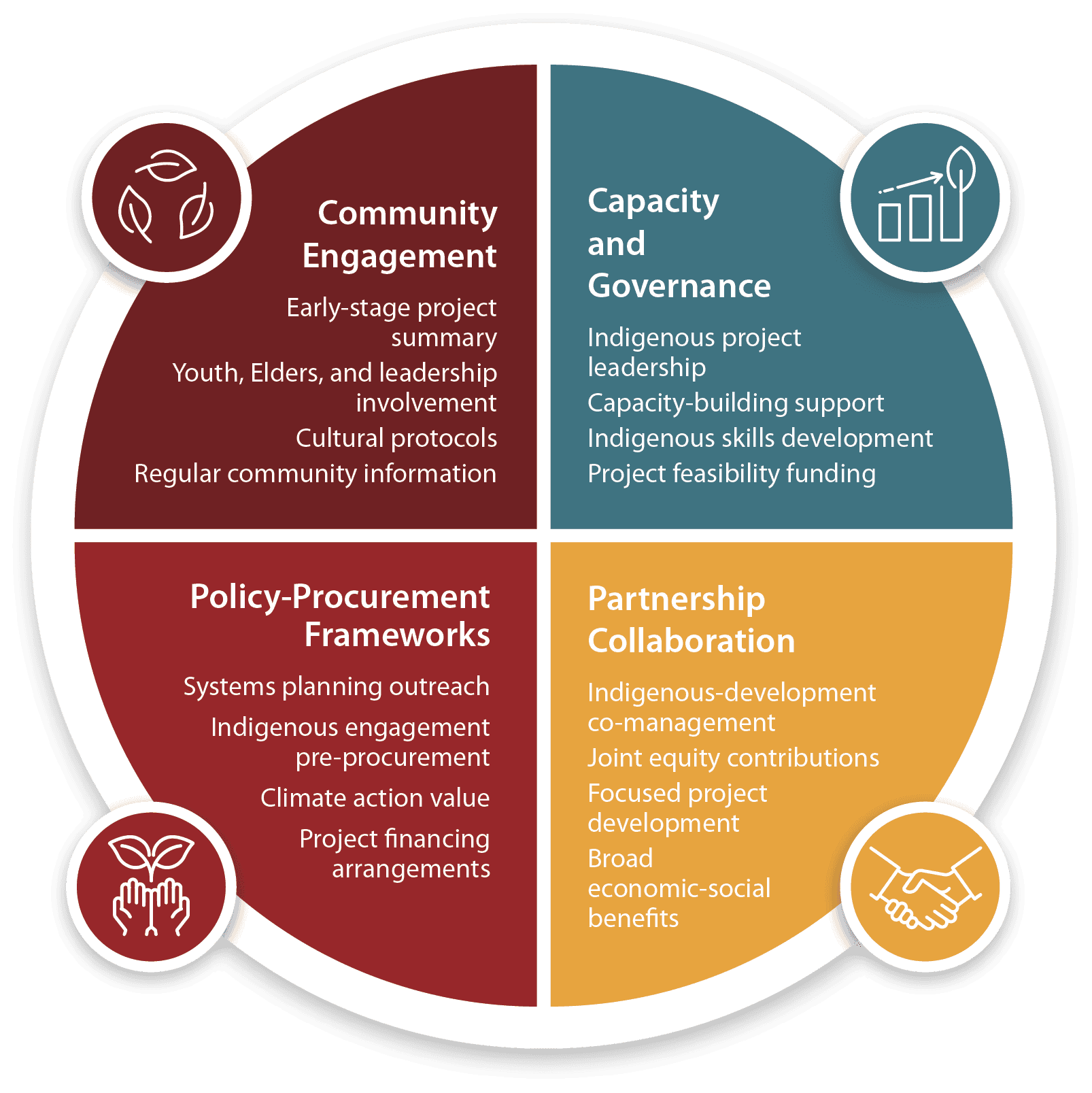
It is important to highlight success factors that underpin Indigenous clean energy leadership and the projects profiled in Indigenous Clean Energy’s third National Survey. The infographic below illustrates the most important success factors for Indigenous clean energy.

These success factors ensure projects establish a solid foundation for community engagement, decision-making, partnerships, financing, and overall development by Indigenous communities and allies.

Recommendations

Indigenous Clean Energy Policy and Programming Recommendations

The potential of further economic and social impact with new and proposed community-focused and utility-scale Indigenous clean energy projects leads Indigenous Clean Energy to make the following recommendations.

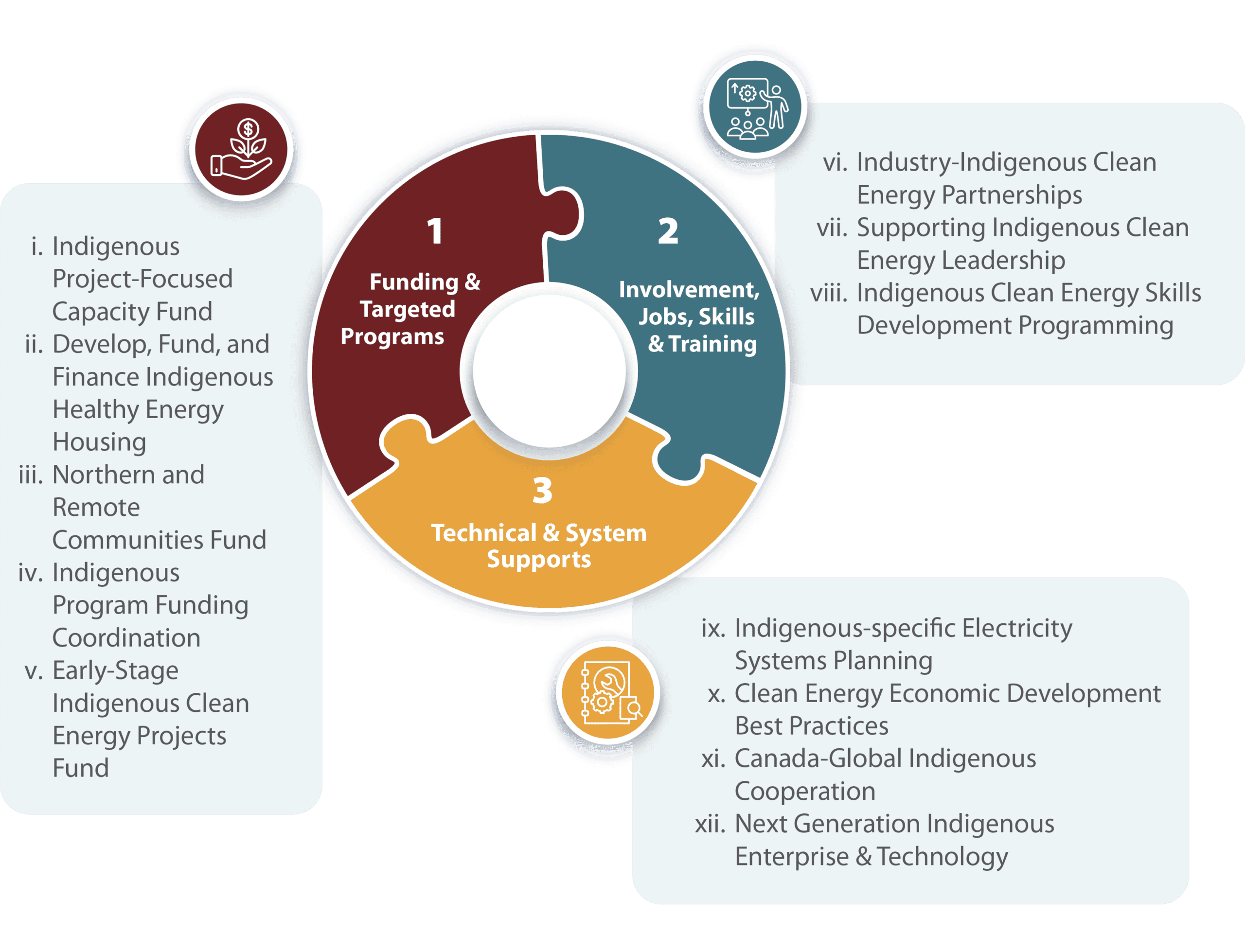
The infographic below summarizes the 12 Indigenous Clean Energy Policy and Programming Recommendations segmented into three categories. Each recommendation has a specific focus and outcome, as well as a set of proposed collaborator relationships.

Project Success Stories

Throughout the Regenerative Energy report, stories of successful Indigenous-led clean energy projects are highlighted, illustrating their positive impacts and benefits for their communities and the broader national landscape.
Innavik Hydro project in Inukjuak
Innavik Hydro is a 7.5-megawatt run-of-river hydroelectric facility that has reduced the community’s dependence on diesel by 80%. The projects is located in Nunavik, northern Quebec, and it stands as one of the largest renewable energy initiatives in off-grid communities, showcasing the potential for Indigenous-led clean energy transitions in remote regions.
Salay Prayzaan: Métis Crossing Solar Project
Salay Prayzaan (which, in Michif, means “a gift from the sun”) is a 4.86-megawatt community solar facility—the northernmost gridconnected solar project of its size in Alberta and the largest Métisowned solar project in Canada.
Meadow Lake Tribal Council EV Charging Station
Aubrey-Anne Laliberte-Pewapisconias, a previous Generation Power youth participant and Indigenous Clean Energy team member, led the installation of a Level 2 electric vehicle charging station at the Meadow Lake Tribal Council (MLTC) head office on Flying Dust First Nation, increasing awareness of and access to electrification infrastructure in First Nation communities.
Energy Efficiency Project Profile
The Algonquins of Pikwakanagan First Nation, located approximately 150 kilometres Northwest of Ottawa, is currently engaged in the development of a large-scale retrofit project that looks beyond simple energy savings. With a community of approximately 275 homes, the vision is to improve the housing stock to prioritize occupant health, comfort, and environmental resiliency, while advancing toward community energy sovereignty.
Download the Report

Miigwetch • Kinanâskomitzin • Wela’lin • Mikwetc • ᒥᑫᐧᐨ • Kuei • Ması Niá:wen • Mígwech • ᖁᔭᓐᓇᒦᒃ • Miigwech • Maarsii

Thank you/Merci in various Indigenous languages

Privacy Policy

Terms of Use

Contact Us

Subscribe to our Newsletter

* indicates required
© Indigenous Clean Energy 2022 | All Rights Reserved | Website by Design de Plume Inc.